EVA foam thickness and density for cosplay: what to buy
Most cosplay armor is cut from 5 or 6 mm high density EVA foam, with thinner foam for details and 8 to 10 mm for helmets and shields. Density decides how clean your bevels look and how well a heated curve holds, so it is worth checking before you buy. Prices below were checked on November 23, 2026.

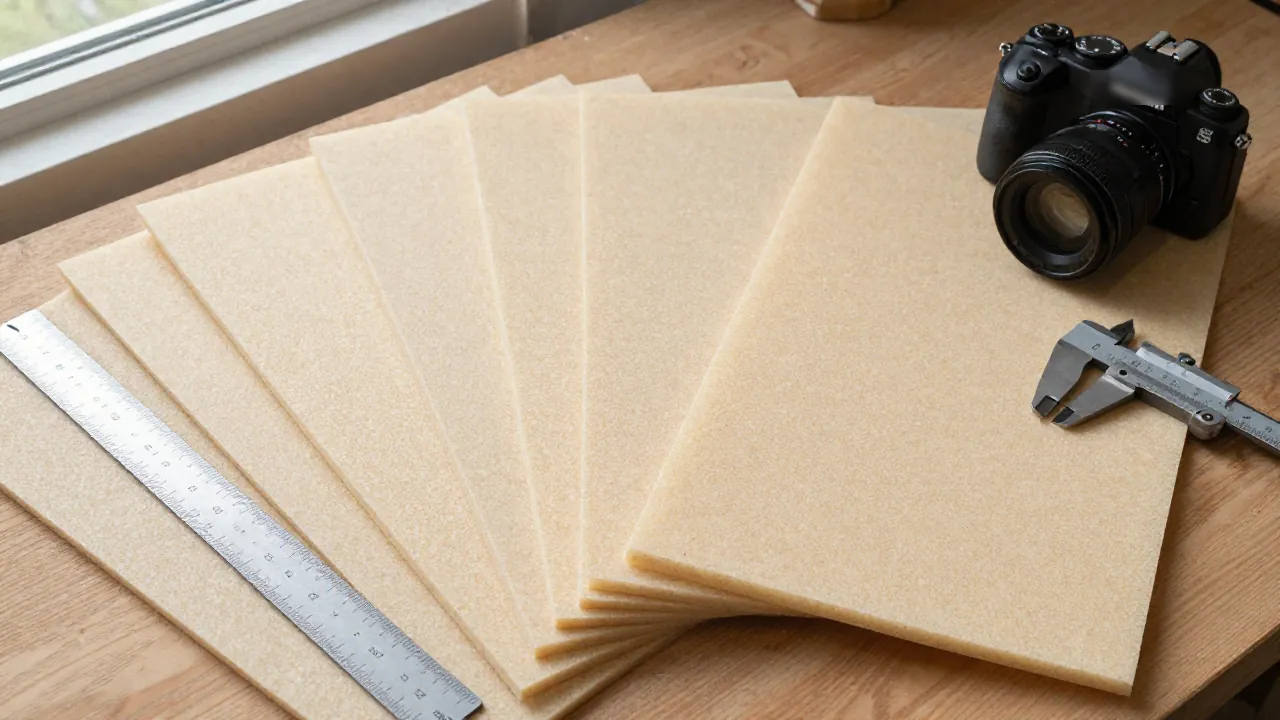
What do thickness and density change?
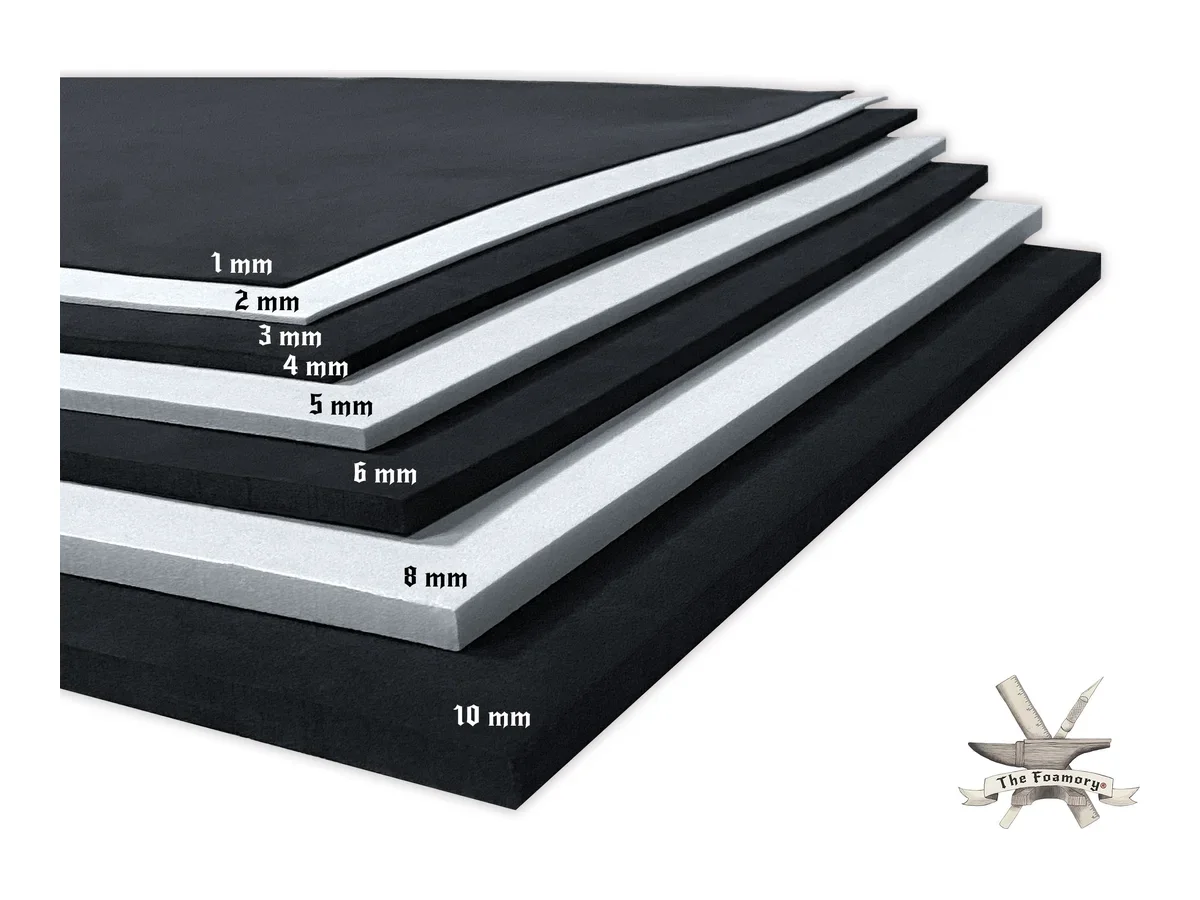
Thickness is easy: it is how much material you have to carve, bevel and bend. Thick foam gives you deep panel lines and solid edges, thin foam bends tightly and stacks into layered details.
Density is the one people skip, and it is the one that shows in photos. Dense foam is stiffer, so a curve you heat into a pauldron stays put, a 45 degree bevel stays crisp and grooves cut with a rotary tool look clean instead of fuzzy. Low density foam, like the floor mats many of us started with, squashes under the blade and tears when you sand it.
Which thickness for which armor piece?
| Piece | Usual thickness | Why |
|---|---|---|
| Chest plate, back plate | 5 to 6 mm | Rigid enough to hold shape, still bends around the torso |
| Bracers, greaves | 5 mm | Wraps around arms and legs without fighting you |
| Pauldrons | 5 to 8 mm | Thicker gives a heavier, chunkier look |
| Helmets | 6 to 10 mm | Room to carve depth and sand seams smooth |
| Shields, thick edges | 8 to 10 mm | Holds a flat shape and survives bumps |
| Trims, filigree, rivets | 2 to 3 mm | Layered on top; bends tightly; foam clay works too |
If you only buy one thickness for a first build, take 5 mm. The MEARCOOH EVA Foam Roll 5 mm roll is the cheapest way to get it in our list, and you can always glue two layers together for a thicker part.
Four high density foams compared
Here are the four foams in our catalog side by side. Density and size come from each brand; prices were checked on November 23, 2026.
| Foam | Thickness | Density | Size | Price | Per liter |
|---|---|---|---|---|---|
| MEARCOOH EVA Foam Roll 5 mm | 5 mm | 86 kg/m³ | 59 x 13.9 in (5.7 sq ft) | $10.19 | $3.85 |
| LabZhang EVA Foam Sheet 8 mm | 8 mm | 80 kg/m³ | 39 x 14 in (3.8 sq ft) | $16.54 | $5.87 |
| Cosplay Pros Ultra High Density EVA Foam | 5 mm | 110 kg/m³ | 37.4 x 17.7 in (4.6 sq ft) | $19.36 | $9.07 |
| The Foamory High Density EVA Foam 6 mm | 6 mm | 85 kg/m³ | 39 x 14 in (3.8 sq ft) | $17.99 | $8.51 |
The Cosplay Pros Ultra High Density EVA Foam is the stiffest at 110 kg/m³; that is the sheet to use for parts people will see up close. The MEARCOOH roll gives the most foam per dollar, which is why it leads our EVA foam ranking.
Rolls or sheets?
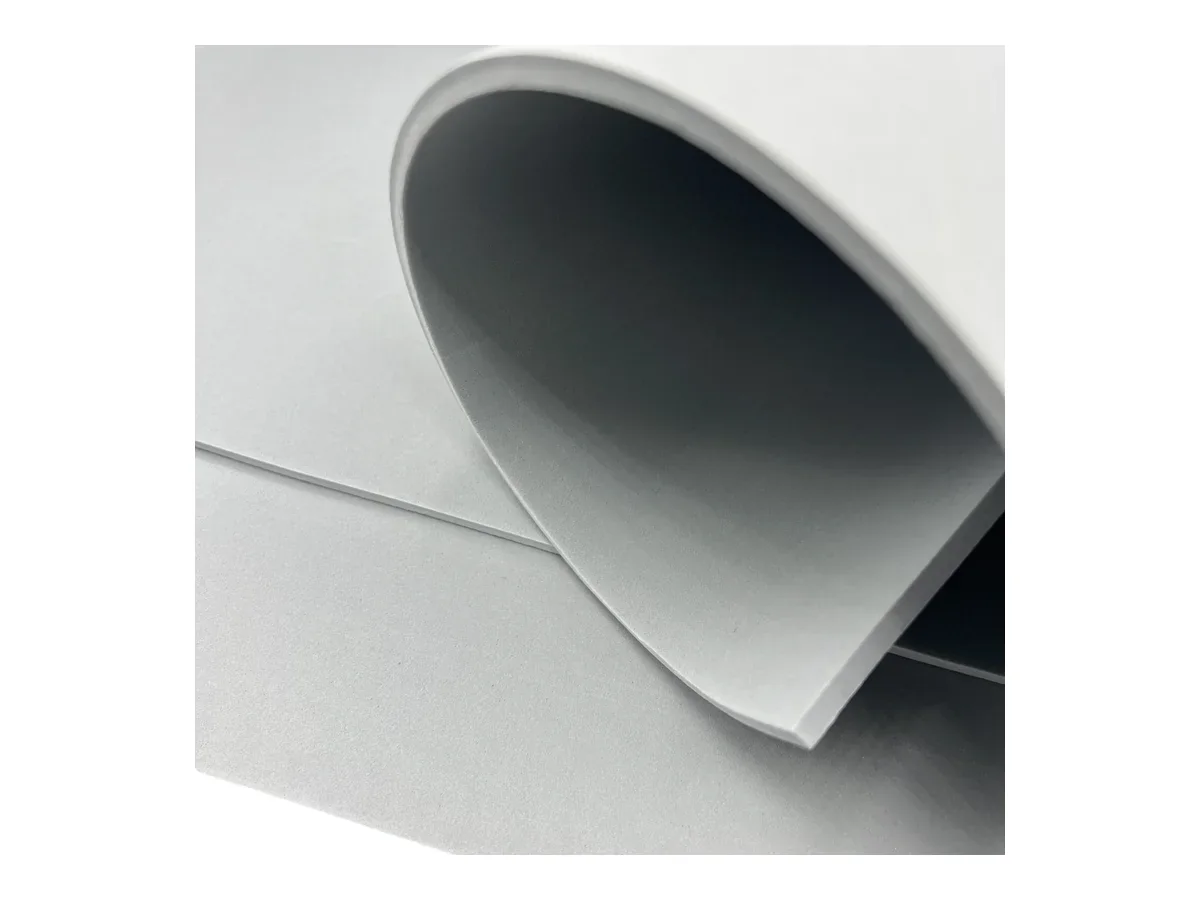
Rolls are long, often cheaper and great for back plates cut in one piece: the MEARCOOH roll is 59 inches long. The catch is the curl. Rolled foam wants to roll back, so flatten it under a few books overnight or warm it gently before you trace a pattern.
Flat sheets stay flat, which makes patterns easier to trace and cuts easier to keep straight. They usually cost a little more per liter.
Does the color matter?
Not for the finish: you will seal and paint over it. It matters while you work. Gray foam shows pen lines and scratches clearly, black foam hides small mistakes but makes patterns harder to read. Some builders keep a white or silver gel pen just for black foam.
Our picks by build
- First armor or big set on a budget: MEARCOOH EVA Foam Roll 5 mm, $10.19.
- Helmets and shields: LabZhang EVA Foam Sheet 8 mm, 8 mm, smooth on both faces.
- Show pieces with crisp bevels: Cosplay Pros Ultra High Density EVA Foam, 110 kg/m³.
- A little more body than 5 mm: The Foamory High Density EVA Foam 6 mm, 6 mm.
Whatever you pick, a fresh blade does more for clean edges than any foam upgrade. Snap off the tip of your utility knife every few cuts.
Product figures come from each brand; prices were checked on November 23, 2026 on Amazon US and brand stores. Cover photo generated for this guide; product images from the brands. How we score: our methodology.
Our selection
Three rated products mentioned in this guide, at checked prices.

Your questions, answered
What thickness of EVA foam is best for cosplay armor?
5 to 6 mm high density foam covers most armor pieces. Use 2 to 3 mm for trims and details and 8 to 10 mm for helmets, shields and thick edges.
What density should cosplay foam be?
Look for a stated density of about 80 kg/m³ or more. The foams we compare go from 80 to 110 kg/m³; the denser the foam, the cleaner the bevels and the better a heated curve holds.
Can I use foam floor mats for cosplay?
Yes for practice and big simple shapes, and plenty of cosplayers start there. Floor mats are usually lower density with a texture on one side, so bevels and grooves look softer than on high density foam.
Can I glue two layers to get thicker foam?
Yes. Coat both faces with contact cement, let it get tacky, then press them together carefully. It is a common way to make thick shields or chunky edges from 5 mm foam.

