How to heat form EVA foam safely, without scorching it
Heat forming is what turns a flat foam cutout into a curved pauldron or a domed helmet panel. Warm the foam evenly with a heat gun until it softens, bend it over a form, and hold it until it cools. The trick is gentle heat and constant movement. Here is how, and how to do it safely.

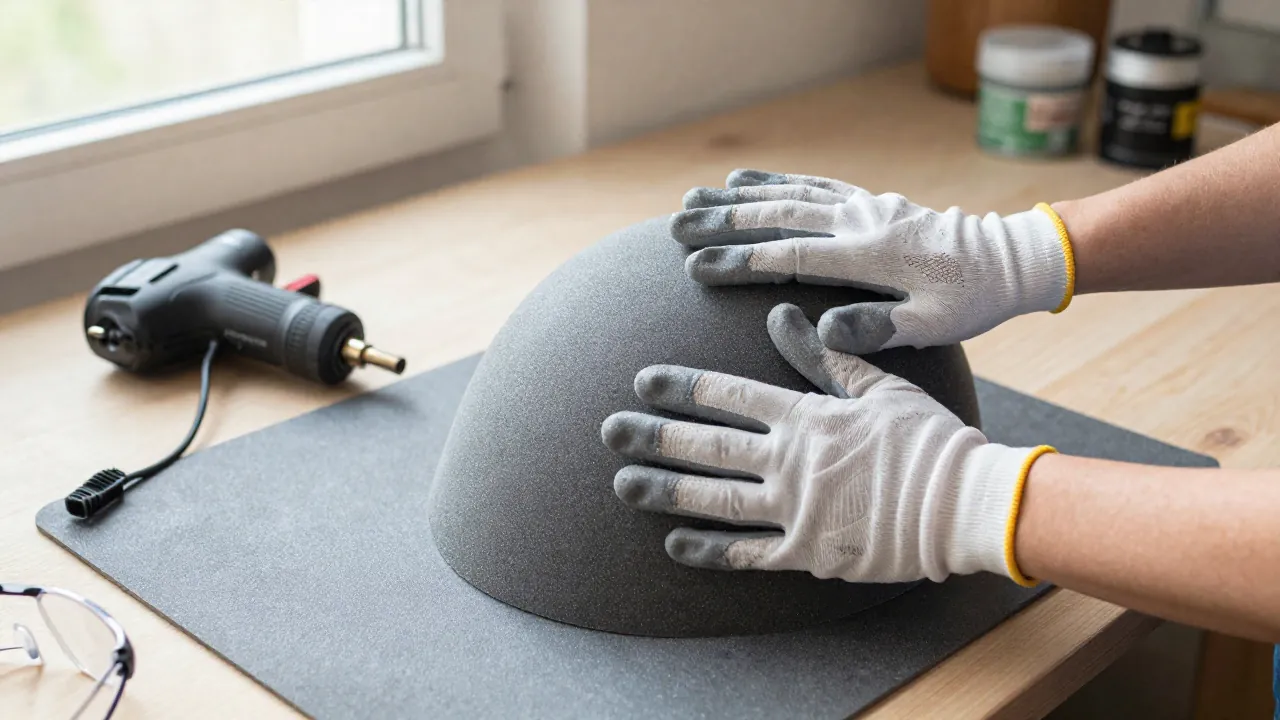
How heat forming works
EVA foam softens when it is warm and keeps the shape it had when it cooled. You use that in two ways: to bend curves into armor pieces, and to seal the surface before paint. The same pass that shapes a bracer also closes its pores.
Thicker and denser foam needs a bit longer to warm through, but the method does not change: even heat, then shape, then hold.
Which heat gun settings for foam?
For foam, the low end of the gun matters more than the top temperature. The three Wagner guns in our catalog compared, with prices checked on November 23, 2026:
| Heat gun | Lowest setting | Highest | Settings | Price |
|---|---|---|---|---|
| Wagner FURNO 500 | 150°F | 1200°F | 12 | $54.00 |
| Wagner HT1000 Heat Gun | 750°F | 1000°F | 2 | $20.00 |
| Wagner FURNO 300 | 750°F | 1100°F | 2 | $30.00 |
The Wagner FURNO 500 starts at 150°F, which makes thin foam, foam clay and Worbla much easier to control. The two-setting guns start at 750°F: still fine for 5 mm and thicker foam if you hold them farther away and never stop moving.
Step by step: shaping a curved piece
- Cut and bevel the piece first. Heat after cutting, not before.
- Set the gun to its lowest setting and hold it a few inches away.
- Sweep across the whole piece, both faces, for 20 to 40 seconds until it softens.
- Bend it by hand or press it over a form: a bowl, a bottle, a foam head, your own arm with a sleeve on.
- Hold the shape until the foam has cooled, then check the curve. Reheat to adjust.
Mistakes that ruin foam
- Holding still: one spot overheats, bubbles and turns brown.
- Too close: the surface skins over and wrinkles while the inside stays cold.
- Heating one face only: the piece curls the wrong way as it cools.
- Heating right after gluing: wait until the contact cement has flashed off, the vapors are flammable.
Heat gun safety
A heat gun has no flame, which is exactly why people get careless with it. Wagner's HT1000 manual asks you to treat hot air tools with the same respect as an open flame, never to touch the nozzle until it has cooled, and to wear work gloves to avoid burns.
- Stand the gun on its back or its stand to cool, never on its nozzle and never on the foam.
- Keep the work area ventilated: overheated foam smokes before it burns.
- Clear the bench of fabric, paper patterns and glue cans before you switch on.
- Unplug the gun when you stop, even for a few minutes.
Product figures come from each brand; prices were checked on November 23, 2026 on Amazon US and brand stores. Cover photo generated for this guide; product images from the brands. How we score: our methodology.
Our selection
Three rated products mentioned in this guide, at checked prices.

See it in action
“Wagner FURNO 500 Heat Gun” · Video by Wagner Spraytech (official channel) on YouTube
Your questions, answered
What temperature do you heat form EVA foam at?
Use the lowest setting of your heat gun first and raise it only if the foam does not soften after half a minute of sweeping. Keep the nozzle moving and a few inches away.
Can you heat form EVA foam with a hair dryer?
A hair dryer is usually not hot enough to shape high density foam properly. A heat gun with a low setting gives you control without much cost.
Why does my EVA foam bubble when I heat it?
Too much heat in one spot. Move the gun faster, hold it farther away or lower the setting.
Do I need to heat seal foam before painting?
Yes, it closes the surface pores so your sealer and paint go on evenly. See our guide to sealing and painting foam.

